WeNou and Oxford Nanopore partner for developing a food authenticity workflow
- WeNou

- Nov 30, 2023
- 1 min read

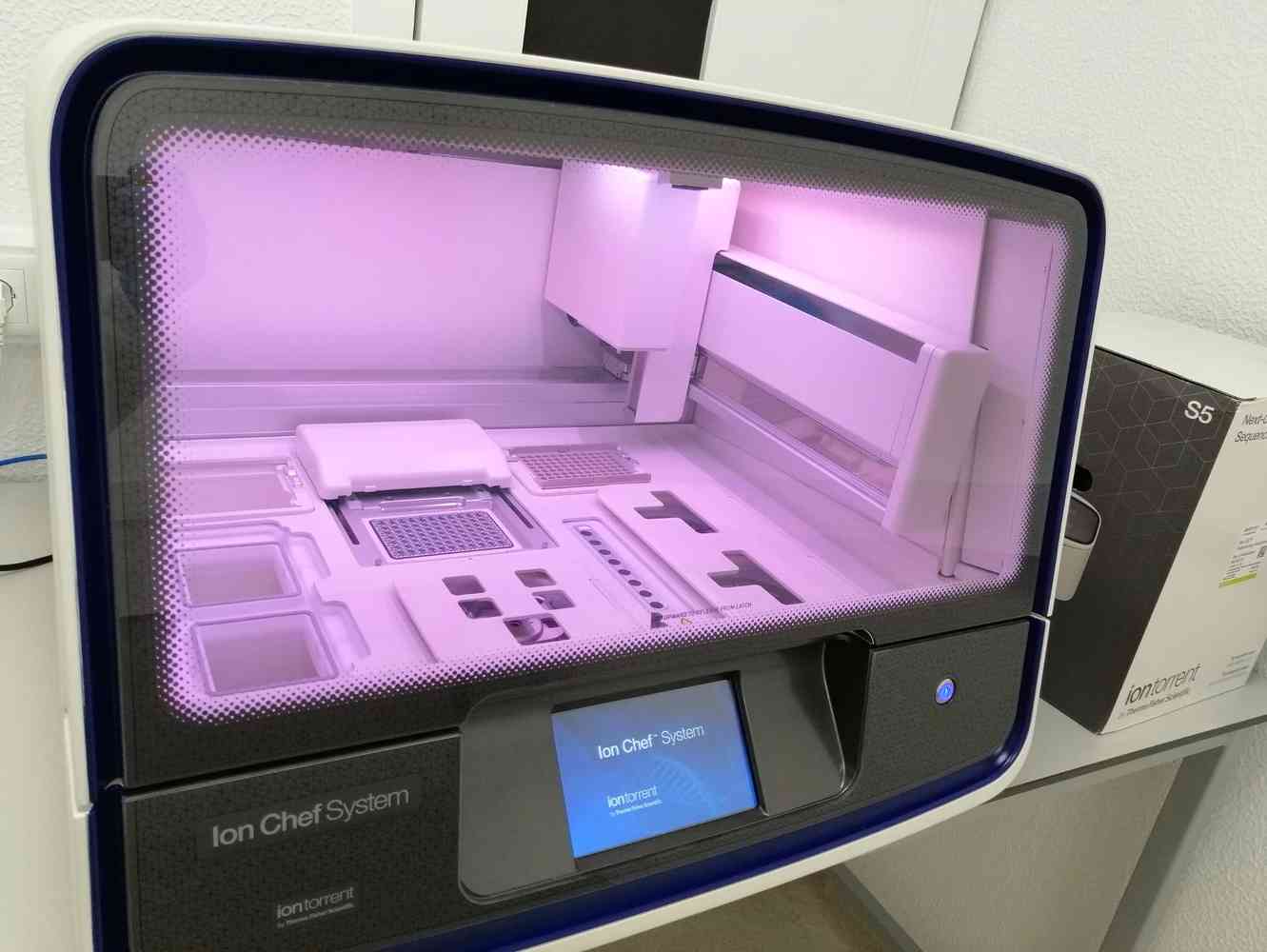
We are very excited to share that we established a partnership with Oxford Nanopore Technologies to develop and validate a fast and cost-effective workflow to assess food and feed authenticity. After validation, the test will allow labs and companies to perform authenticity testing and guarantee the supply chain integrity. We are working together to ensure food authenticity, quality and safety and fight food fraud.
Two things distinguish nanopore sequencing from the platforms that established DNA-based food testing. It reads long fragments of DNA in a single pass rather than assembling an answer from short ones, and it produces data while the run is still going, so analysis can begin before the sequencing has finished. The instruments are also small enough to work outside a large sequencing facility.
For authenticity testing that combination is interesting because of where the bottleneck actually sits. The laboratory step is rarely the slow part: sampling, shipping, batching and reporting are. A method that can be run closer to the material, on fewer samples at a time, changes the economics of asking the question at all, and a question that is affordable to ask often is worth more to a producer than a question that is only asked once something has already gone wrong.
Validation is the substance of this work rather than a formality after it. A workflow has to be shown to give the correct answer on material of known composition before it can be trusted on material of unknown composition: which species it resolves and which it confuses, how little of a species it can find in a mixture, how it behaves on cooked, dried and emulsified matrices, and how reproducible the result is between operators and between runs.
That is the part we are contributing, and it is the part that decides whether a result is usable: defining the workflow, running it against material of known composition and documenting what it can and cannot resolve. Until that work is complete, the questions clients bring us are answered with the methods already in routine use in the laboratory.